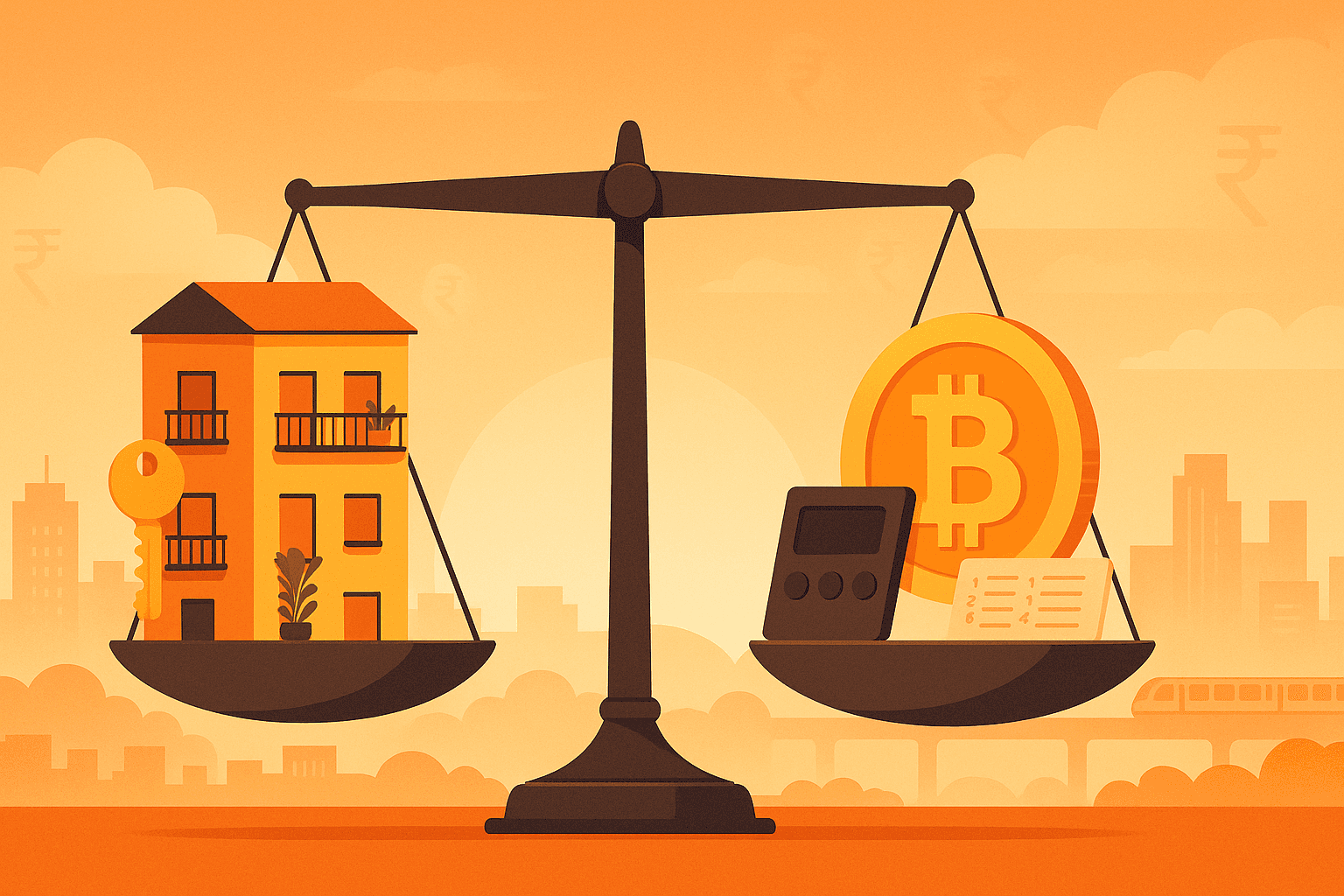
Buying a house has long been a milestone in India. Parents urge it, banks enable it, and neighbours respect it. Bitcoin, by contrast, is new and hard to explain at the dinner table. One is a door you can knock on; the other is a line of code that lives on a global network. Deciding between them isn’t only about returns. It’s about your stage of life, your appetite for risk, your need for cash flow, and the kind of freedom you want.
Let’s start with what each is really offering. Real estate promises use and income. You can live in it, or you can let it out and collect rent. The return comes in two parts: the monthly cash you receive after society charges, repairs, and the odd month of vacancy; and the price appreciation that may happen as the neighbourhood develops, the metro line gets built, or inflation quietly pushes values up. Loans make property possible for many families. Leverage can be empowering when prices rise and EMIs fit your income, but it bites when rates climb, tenants leave, or projects get delayed.
Bitcoin doesn’t pay you rent. Its pitch is different: a scarce digital asset with a fixed supply that anyone can own, move, or store without asking permission. The return, if it comes, comes from adoption. As more people and institutions decide they want some exposure to a non‑sovereign, portable form of savings, the market price responds. It is volatile—sometimes brutally so. A drop of thirty or forty percent in a season is part of the weather. That volatility cuts both ways: it can feel like a punch if you need the money soon; it can be tolerable, even useful, if you treat Bitcoin as a long‑term, small slice of your savings and give it years to work.
Entry barriers are very different. Property demands big numbers upfront. Even a modest flat absorbs lakhs before you receive a single rupee of rent: down payment, stamp duty, registration, brokerage, and furnishing. Bitcoin lets you begin with almost nothing and scale up slowly. You can buy a little, learn how to hold it safely, and only then increase your exposure. That learning—called self‑custody—is worth emphasising. If you hold coins on an exchange, you are trusting a middleman. If you hold them yourself with a hardware wallet and a backup of your seed phrase, you reduce that risk. It’s not difficult, but it deserves attention before size.
Liquidity is another line of contrast. A house is slow to buy and slow to sell. You may find a buyer quickly in a hot market, but the paperwork, negotiation, and formalities take their time. Bitcoin trades twenty‑four hours a day, seven days a week. You can convert it to rupees in seconds. That convenience is a double‑edged sword. Easy selling makes it easy to panic. The best antidote is a simple plan you write down in calm weather: how much you own, why you own it, and under what conditions you would add, hold, or reduce.
Risk looks different in each world. With real estate, the dangers are familiar: unclear titles, builder delays, weak construction, stagnant locations, surprise maintenance, and the reality that tenants can be hard to find at the rent you imagined. With Bitcoin, the biggest risk most newcomers face is themselves—buying too much too soon, or storing coins carelessly. There is also regulatory risk, and the undeniable stress of large price swings. A useful rule of thumb is the sleep test: if the thought of your position falling by half would keep you awake at night, your allocation is too large. Start small. Let your knowledge grow first, then your position.
Costs and friction also shape outcomes. Property is surrounded by fees, taxes, and ongoing care. Stamp duty and registration add up at the start; society maintenance, repairs, and property tax continue quietly every year. Vacancy is a cost that doesn’t show up on paper until it does. On the other side, Bitcoin’s costs are concentrated around transactions: an exchange spread when you buy or sell, and a network fee when you move coins. There is no paint to peel and no lift to repair.
Taxes matter, though they change over time and depend on your situation. Rental income is taxable. Selling a property can trigger capital gains with rules about indexation and exemptions that your CA can help navigate. Bitcoin and other virtual digital assets are also taxed on gains; the exact treatment rests on prevailing regulations and how you transact. A short conversation with a professional is worth the clarity.
So how should an ordinary saver in India think about the choice? Begin with your life, not the market. If you plan to live in one city for the next seven to ten years, buying a home you will actually use can be a life decision rather than a spreadsheet exercise. The benefit is not only financial; it is stability, schools, and community. If, on the other hand, your work is fluid—you might move, travel, or simply value optionality—tying yourself to a heavy, illiquid asset may feel like a constraint. In that case, a lighter mix of assets, with a measured allocation to Bitcoin, lets you keep doors open.
Consider three sketches. A fresh graduate with fifteen thousand rupees a month to invest will probably be better served by building an emergency fund, clearing any expensive debt, and starting a small, regular Bitcoin purchase while learning custody. Property can wait until income and place become more certain. A family with steady incomes and roots in one city may choose to buy a primary home for stability and supplement it with a modest Bitcoin position for long‑term growth. An NRI or a remote worker who values freedom of movement might avoid heavy property exposure for now, keeping savings liquid and allocating a slightly larger—but still sleep‑friendly—portion to Bitcoin.
Common mistakes are surprisingly similar across both assets. In property, stretching for an “investment flat” because everyone seems to be doing it—without running the actual rental math—is a frequent regret. Buying under‑construction without checking the builder’s history or the project’s RERA status invites avoidable stress. In Bitcoin, the classic error is going all‑in at the top, then panic‑selling at the first serious dip. Another is keeping coins on exchanges forever because self‑custody feels intimidating. It isn’t, if you approach it patiently: buy a little, practice a wallet restore, and only then add size.
If you like decision flows, here’s a gentle one you can follow without spreadsheets. First, set aside a few months of expenses in safe, liquid instruments. Second, clear high‑interest loans. Third, be honest about your time horizon: if you’re going to need the money within three years, avoid large positions in volatile assets. Fourth, think about life needs: if owning a home would genuinely improve life and you’re likely to stay, that’s a strong reason in itself. Finally, for growth, add a small, steady Bitcoin position that you can leave alone for four to eight years. Review annually; don’t micromanage weekly.
There isn’t a single correct answer because your life isn’t a spreadsheet. Real estate suits people who value use, income, and social comfort, and who are ready to accept responsibility for a physical asset with all its paperwork and upkeep. Bitcoin suits people who value portability, global access, and asymmetric upside, and who can live with price swings in exchange for long‑term potential. Most Indians don’t need to choose one flag forever. A home you actually use—and a measured, long‑term Bitcoin position—can sit together peacefully in the same household, each doing a different job.
Invest only in what you understand. Learn custody before you scale. And when it comes to taxes, ask a CA before you ask a friend.