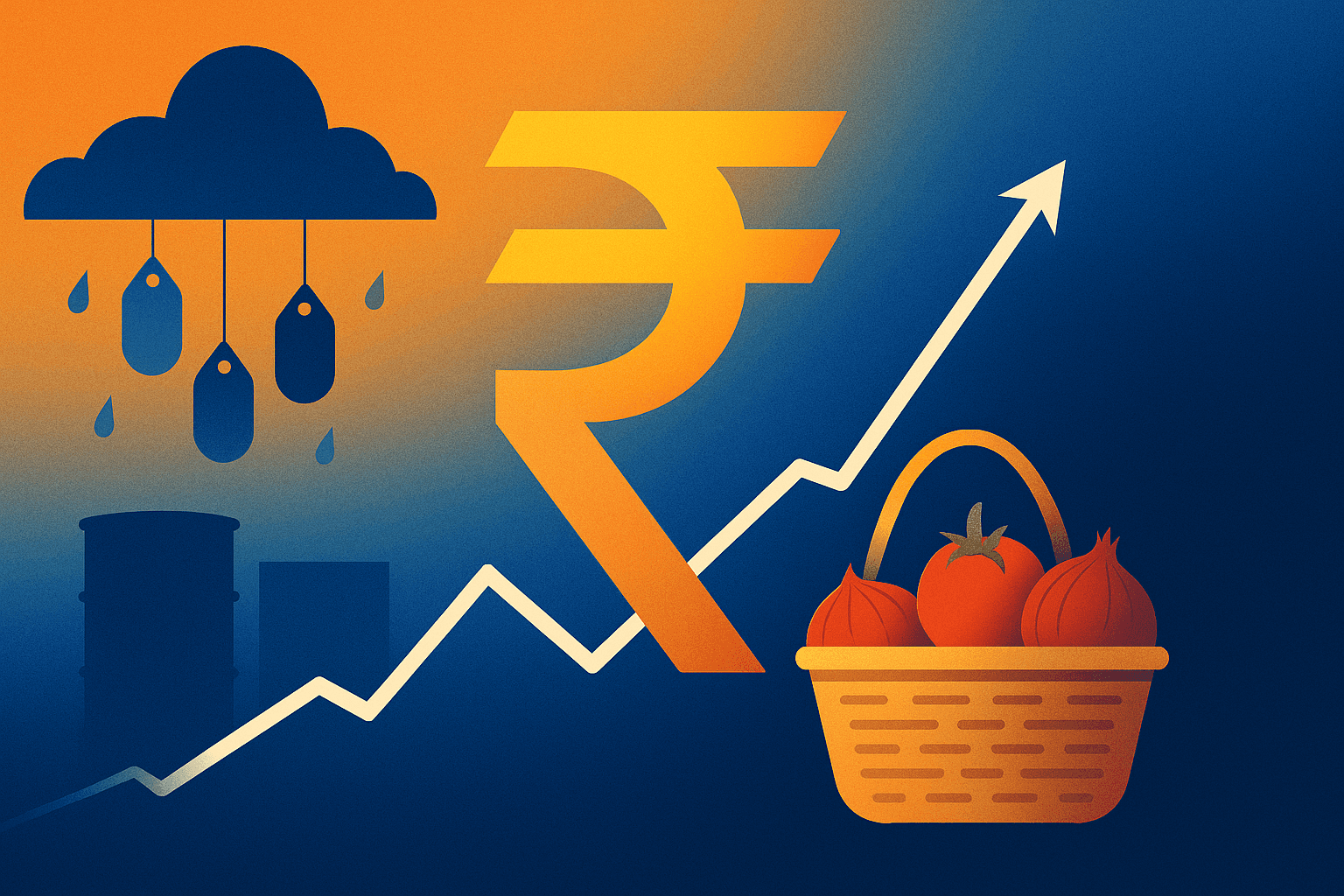
India’s inflation story rarely moves in a straight line. It often arrives in waves. Prices settle for a while, a few shocks roll in, and the numbers climb again. Even with better policy and stronger supply chains than a decade ago, several structural features of the Indian economy keep the door open for fresh bouts of inflation. Here is the case, told plainly and without jargon.
1. Food drives the headline number
Food carries a large weight in the consumer price index. That single fact gives India a built in volatility. A patchy monsoon, a disease in a key crop, or a supply disruption in perishables can lift headline inflation even when services and manufactured goods are calm. Storage and logistics have improved, yet onions, tomatoes, pulses, and milk can still move the needle for the entire basket. As long as weather and agriculture remain central to household spending, price spikes in food will recur.
2. Oil prices and the rupee create an import channel
India imports most of its crude oil. When global oil prices rise, transport, fertilizers, and many basic goods become costlier. The exchange rate adds a second layer. If the rupee weakens during a period of firm oil prices, the same barrel costs more in rupees. That pass through shows up at the pump and then in freight and food. Domestic tax policy can smooth the blow for a time, yet the underlying exposure to oil and the dollar does not go away quickly.
3. Supply chains still face chokepoints
Cold storage, rail, and ports have expanded, but agriculture and small manufacturing still rely on long routes and many intermediaries. Any disruption in a few key nodes can tighten supplies and lift prices. Butter and edible oils are classic examples. The same is true for imported inputs such as chemicals, specialty steel, and electronics components. If shipping costs or global lead times jump, domestic shelves feel it.
4. Fiscal support is large by design
Public investment in roads, rail, and power supports long term growth. It also puts steady demand into the system. Even with a path toward fiscal consolidation, the government still borrows significant sums and spends across many programs. When inflation cools, public demand can help growth recover, which is good, but it also raises the risk that prices pick up again once supply tightness returns. The balance is sensible, yet it keeps a floor under nominal demand.
5. Money and credit grow with the economy
As incomes rise and formal banking reaches more people, deposits, loans, and digital payments keep expanding. Credit growth supports housing, vehicles, and small enterprise investment. Over time that steady growth in money and credit lifts the general price level unless productivity and supply capacity race ahead. Services prices are the usual place where this slow pull shows up.
6. Expectations are sticky
Households remember the last time tomatoes or onions spiked. Small firms remember the last jump in diesel or freight. Those memories shape pricing behavior. When a new shock arrives, even if it is temporary, firms adjust prices quickly and households accept the change earlier than they would in a world with very low and very stable inflation. This stickiness does not cause every spike, but it amplifies them.
7. Administered prices can delay but not erase pressure
Fuel taxes, electricity tariffs, and certain public prices sometimes stay unchanged for policy reasons. This can smooth inflation today but it often shifts the adjustment to a later quarter. When the revision finally comes, it can land in one go. The headline number then jumps, even if the underlying reason is simply a catch up to earlier costs.
8. Urbanization lifts services demand
More people move to cities each year. Urban households spend more on rent, eating out, health care, education, transport, and personal services. Many of these prices react slowly to monetary policy and are shaped by wages and real estate dynamics. As the services share of the economy rises, these slow moving prices can keep core inflation firm even when goods are quiet.
9. Global cycles still matter
India has stronger buffers than in the past and a more credible central bank. Still, global cycles in food, fertilizers, metals, shipping, and finance can arrive without much warning. A weather event in another part of the world can hit edible oils or pulses. A supply cut in crude can ripple through freight and fertilizers. A swing in global risk appetite can move the dollar and therefore the rupee. None of these are within full domestic control.
10. Measurement can improve but lived prices are what people feel
Economists debate how to capture subsidies, free grain, or changes in quality. Better measurement is useful for policy and for markets. For households, the experience at the kirana and the petrol station is what counts. If those bills rise, the impression of inflation hardens regardless of how statisticians record the basket. That gap between measured inflation and felt inflation also shapes future expectations.
What this means in practice
None of this argues for runaway prices. India’s policy framework is much stronger today. The central bank targets inflation, communication is clearer, and financial markets react faster to signals. Food imports, buffer stocks, and targeted interventions can soften the blow when a single crop misbehaves. Public capex raises supply capacity over time. The result is a pattern that looks like a series of swells rather than a single tidal wave.
So why does more rupee inflation feel inevitable at intervals
Because the structure of the economy bakes in repeated tests. A poor crop in a large state, a firm dollar, a jump in crude, or a delayed tariff revision can combine to lift prices for a few months. Then supply catches up, imports arrive, or policy leans against demand, and the wave recedes. Planning for these cycles is wiser than hoping they vanish.
For households, this suggests a simple playbook. Keep a small buffer for food and fuel expenses. When prices are calm, pay down expensive credit. When prices rise, avoid large discretionary purchases unless you have a cushion. For small firms, build some flexibility into contracts and inventories, and watch input costs that are linked to oil or the dollar.
Inflation in India will keep returning in pulses. The aim is not to chase every pulse, but to stay ready for the next one while the broader growth story unfolds.